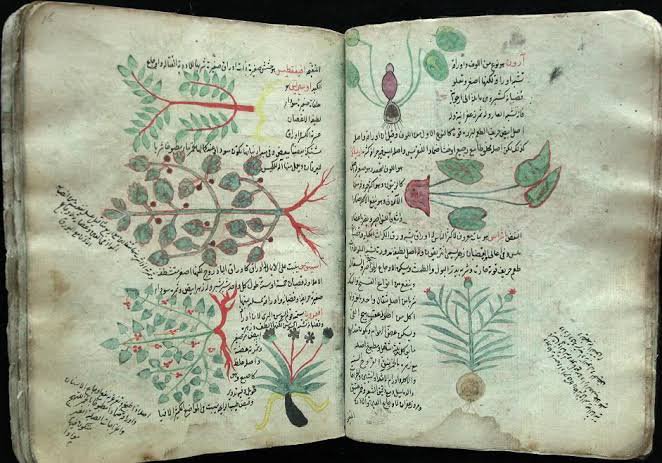
Explore The World

5 deserted but beautiful tourist destinations in the world

If you are busy with your daily activities and want to go somewhere far away, there are many beautiful tourist destinations around the world where you can breathe a sigh of relief. But it is important to remember that going to these places will take some effort. So you have to be prepared. For example, after climbing 300 meters of sand dunes or an active volcano, you will not find a comfortable bed in a five star hotel here.

Concordia Pakistan:

To reach Concordia, the base camp of K2, the second highest mountain in the world, you will have to walk 10 days in Gilgit-Baltistan and cross the Baltoro, Goodwin Austin and Venezia glaciers.

Then you will reach the foot of K2, the second largest mountain in the world. There is no easy way to get here. It is one of the few places in the world where you can be buried in the middle of the mountains. It is called the ‘throne of the mountain gods’. The secret to the beauty of Concordia is its remoteness.

It was named after European tourists who thought the place looked like the European mountain range, the Alps.

Cape York, (Australia):

Australia is a country with many deserts. Cape York is a remote and inaccessible area for cities. To get to the far north of the country, you have to travel in a four-wheel drive jeep.

Cape York is about 1,000 kilometers from Cape Cairns, which means traveling by car for days and crossing crocodile-laden lakes. Your reward will be a rocky coastline. Just a rocky area, nothing more.

Quarter empty (Saudi Arabia):

Call it the Quarter of Empty or the ‘House of Silence’, the largest area of sand on earth feels somewhat empty. Maybe that’s why it’s called ‘Empty Quarter’. This area of the Arabian Peninsula is larger than France, Belgium and the Netherlands.

The sand dunes are even taller than the Eiffel Tower, which is more than 300 meters high and stretches for hundreds of kilometers. These sand dunes move up to 30 meters every year due to strong winds.

North Pole:

The northernmost point in the world is the North Pole. Some people call it the home of Santa Claus. There is no land in the North Pole compared to the South Pole.

Tourists who come here walk on water. The water that is made of ice in the Atlantic Ocean. In summer it is 9 million square kilometers, while in winter it is 16 million square kilometers. Its depth is only 5 meters. It’s amazing when compared to Antarctica’s 3,000-meter-wide ice.

National Park, Canada:

Canada’s second-largest national park is probably the least visited. It is located in the far north of North America on the island of Alzheimer’s, 80 degrees north, also known as Cape Columbia.

Due to the cold here, tourists have to keep their hands in their pockets. You have to come here from a nearby village by charter plane. There are no facilities like roads or trees in this park. But there are polar bears and beautiful mountains. It is also home to Canada’s northernmost village, Gers Fayward. You can go there too.

Muslim Scientists

Thabit Ibn Qurra (836-901 C.E.

Thabit Ibn Qurra Ibn Marwan al-Sabi al-Harrani was born in the year 836 C.E. at Harran (present Turkey). As the name indicates he was basically a member of the Sabian sect, but the great Muslim mathematician Muhammad Ibn Musa Ibn Shakir, impressed by his knowledge of languages, and realising his potential for a scientific career, selected him to join the scientific group at Baghdad that was being patronised by the Abbasid Caliphs. There, he studied under the famous Banu Musa brothers. It was in this setting that Thabit contributed to several branches of science, notably mathematics, astronomy and mechanics, in addition to translating a large number of works from Greek to Arabic. Later, he was patronised by the Abbasid Caliph al-M’utadid. After a long career of scholarship, Thabit died at Baghdad in 901 C.E.
Al-Jazira region and its subdivisions (Diyar Bakr, Diyar Mudar, and Diyar Rabi’a) during the Abbasid Caliphate
Thabit’s major contribution lies in mathematics and astronomy. He was instrumental in extending the concept of traditional geometry to geometrical algebra and proposed several theories that led to the development of non-Euclidean geometry, spherical trigonometry, integral calculus and real numbers. He criticised a number of theorems of Euclid’s elements and proposed important improvements. He applied arithmetical terminology to geometrical quantities, and studied several aspects of conic sections, notably those of parabola and ellipse. A number of his computations aimed at determining the surfaces and volumes of different types of bodies and constitute, in fact, the processes of integral calculus, as developed later.
Thabit ibn Qurra was a native of Harran and a member of the Sabian sect. The Sabian religious sect were star worshippers from Harran often confused with the Mandaeans. Of course being worshipers of the stars meant that there was strong motivation for the study of astronomy and the sect produced many quality astronomers and mathematicians. The sect, with strong Greek connections, had in earlier times adopted Greek culture, and it was common for members to speak Greek although after the conquest of the Sabians by Islam, they became Arabic speakers. There was another language spoken in southeastern Turkey, namely Syriac, which was based on the East Aramaic dialect of Edessa. This language was Thabit ibn Qurra’s native language, but he was fluent in both Greek and Arabic.
Some accounts say that Thabit was a money changer as a young man. This is quite possible but some historians do not agree. Certainly he inherited a large family fortune and must have come from a family of high standing in the community. Muhammad ibn Musa ibn Shakir, who visited Harran, was impressed at Thabit’s knowledge of languages and, realising the young man’s potential, persuaded him to go to Baghdad and take lessons in mathematics from him and his brothers the Banu Musa.
In Baghdad Thabit received mathematical training and also training in medicine, which was common for scholars of that time. He returned to Harran but his liberal philosophies led to a religious court appearance when he had to recant his ‘heresies’. To escape further persecution he left Harran and was appointed court astronomer in Baghdad. There Thabit’s patron was the Caliph, al-Mu’tadid, one of the greatest of the ‘Abbasid caliphs.
At this time there were many patrons who employed talented scientists to translate Greek text into Arabic and Thabit, with his great skills in languages as well as great mathematical skills, translated and revised many of the important Greek works. The two earliest translations of Euclid’s Elements were made by alHajjaj. These are lost except for some fragments. There are, however, numerous manuscript versions of the third translation into Arabic which was made by Hunayn ibn Ishaq and revised by Thabit. Knowledge today of the complex story of the Arabic translations of Euclid’s Elements indicates that all later Arabic versions develop from this revision by Thabit.
Pages from Thābit’s Arabic translation of Apollonius’ Conics
In fact many Greek texts survive today only because of this industry in bringing Greek learning to the Arab world. However we must not think that the mathematicians such as Thabit were mere preservers of Greek knowledge. Far from it, Thabit was a brilliant scholar who made many important mathematical discoveries.
Although Thabit contributed to a number of areas the most important of his work was in mathematics where he:-

played an important role in preparing the way for such important mathematical discoveries as the extension of the concept of number to (positive) real numbers, integral calculus, theorems in spherical trigonometry, analytic geometry, and non-euclidean geometry. In astronomy Thabit was one of the first reformers of the Ptolemaic system, and in mechanics he was a founder of statics.

We shall examine in more detail Thabit’s work in these areas, in particular his work in number theory on amicable numbers. Suppose that, in modern notation, S(n) denotes the sum of the aliquot parts of n, that is the sum of its proper quotients. Perfect numbers are those numbers n with S(n) = n while m and n are amicable if S(n) = m, and S(m) = n. In Book on the determination of amicable numbers Thabit claims that Pythagoras began the study of perfect and amicable numbers. This claim, probably first made by Iamblichus in his biography of Pythagoras written in the 3rd century AD where he gave the amicable numbers 220 and 284, is almost certainly false. However Thabit then states quite correctly that although Euclid and Nicomachus studied perfect numbers, and Euclid gave a rule for determining them:-

neither of these authors either mentioned or showed interest in (amicable numbers).

Thabit continues..

Since the matter of (amicable numbers) has occurred to my mind, and since I have derived a proof for them, I did not wish to write the rule without proving it perfectly because they have been neglected by (Euclid and Nicomachus). I shall therefore prove it after introducing the necessary lemmas.

After giving nine lemmas Thabit states and proves his theorem: for n > 1, let pn= 3.2n-1 and qn= 9.22n-1-1. If pn-1, pn, and qn are prime numbers, then a = 2npn-1pn and b = 2nqn are amicable numbers while A is abundant and B is deficient. Note that an abundant number n satisfies S(n) > n, and a deficient number n satisfies S(n) < n. Where the authors conjecture how Thabit might have discovered the rule. Hogendijk shows that Thabit was probably the first to discover the pair of amicable numbers 17296, 18416.
Another important aspect of Thabit’s work was his book on the composition of ratios. In this Thabit deals with arithmetical operations applied to ratios of geometrical quantities. The Greeks had dealt with geometric quantities but had not thought of them in the same way as numbers to which the usual rules of arithmetic could be applied.
Thabit generalised Pythagoras’s theorem to an arbitrary triangle (as did Pappus). He also discussed parabolas, angle trisection and magic squares. Thabit’s work on parabolas and paraboliods is of particular importance since it is one of the steps taken towards the discovery of the integral calculus. An important consideration here is whether Thabit was familiar with the methods of Archimedes. Most authors believe that although Thabit was familiar with Archimedes’ results on the quadrature of the parabola, he did not have either of Archimedes’ two treatises on the topic. In fact Thabit effectively computed the integral of x and:-

The computation is based essentially on the application of upper and lower integral sums, and the proof is done by the method of exhaustion: there, for the first time, the segment of integration is divided into unequal parts.

Thabit also wrote on astronomy, writing Concerning the Motion of the Eighth Sphere. He believed (wrongly) that the motion of the equinoxes oscillates. He also published observations of the Sun. In fact eight complete treatises by Thabit on astronomy have survived and the article describes:-

When we consider this body of work in the context of the beginnings of the scientific movement in ninth-century Baghdad, we see that Thabit played a very important role in the establishment of astronomy as an exact science (method, topics and program), which developed along three lines: the theorisation of the relation between observation and theory, the ‘mathematisation’ of astronomy, and the focus on the conflicting relationship between ‘mathematical’ astronomy and ‘physical’ astronomy.

An important work Kitab fi’l-qarastun (The book on the beam balance) by Thabit is on mechanics. It was translated into Latin by Gherard of Cremona and became a popular work on mechanics. In this work Thabit proves the principle of equilibrium of levers. He demonstrates that two equal loads, balancing a third, can be replaced by their sum placed at a point halfway between the two without destroying the equilibrium. After giving a generalisation Thabit then considers the case of equally distributed continuous loads and finds the conditions for the equilibrium of a heavy beam. Of course Archimedes considered a theory of centres of gravity, but Thabit’s work is not based on Archimedes’ theory.
Finally we should comment on Thabit’s work on philosophy and other topics. Thabit had a student Abu Musa Isa ibn Usayyid who was a Christian from Iraq. Ibn Usayyid asked various questions of his teacher Thabit and a manuscript exists of the answers given by Thabit. Thabit’s concept of number follows that of Plato and he argues that numbers exist, whether someone knows them or not, and they are separate from numerable things. In other respects Thabit is critical of the ideas of Plato and Aristotle, particularly regarding motion. It would seem that here his ideas are based on an acceptance of using arguments concerning motion in his geometrical arguments.
Thabit also wrote:-

logic, psychology, ethics, the classification of sciences, the grammar of the Syriac language, politics, the symbolism of Plato’s Republic … religion and the customs of the Sabians.

His son, Sinan ibn Thabit, and his grandson Ibrahim ibn Sinan ibn Thabit, both were eminent scholars who contributed to the development of mathematics. Neither, however, reached the mathematical heights of Thabit.
Muslim Scientists

AbuHanifa al-Dinawari (d. 895 C.E.)

Abu Hanifa al-Dinawari (d.895 A.D) lived in Andalusia, Muslim Spain. His work has been made known by the German scholar: Silberberg in a thesis in Breslau in 1908, which contains the descriptions of about 400 plants. However, what is described by Silberberg is just a little part of what has survived; just two volumes out of the six.

His work has been made known by the German scholar: Silberberg in a thesis in Breslau in 1908.

In his expose on the earth, Al-Dinawari describes a variety of soils, explaining which is good for planting, its properties and qualities. Al-Dinawari also describes plant evolution from its birth to its death, including the phases of growth and production of flower and fruit. He then covers various crops including: cereals, vineyards and date palms. Relying on his predecessors, he also explains trees, mountains, plains, deserts, aromatic plants, woods, plants used in dyes, honey, bees

Al-Dinawari also describes plant evolution from its birth to its death.

Al-Dinawari also devoted one chapter to the classification of plants (tajnis al-nabat) which he mentions in one of the volumes that have survived, but the work itself on the subject has also been lost. Al-Dinawari’s Book of plants also covers various other subjects such as astronomy and meteorology.

مسلمان سائنسدان اور مفکرین

Yaqub Ibni Ishaq Al-Kindi (800-873 C.E.)

Yaqub Ibni Ishaq Al-Kindi (800-873 C.E.) Abu Yousuf Yaqub Ibn Ishaq al-Kindi was born at Kufa around 800 C.E. His father was an official of Haroon al-Rashid. Al-Kindi was a contemporary of al-Mamun, al-Mu’tasim and al-Mutawakkil and flourished largely at Baghdad. He vas formally employed by Mutawakkil as a calligrapher. On account of his philosophical views, Mutawakkil was annoyed with him and confiscated all his books. These were, however, returned later on. He died in 873 C.E. during the reign of al-M’utamid.

Al-Kindi was born and brought up in Kufah, which was a centre for Arab culture and learning in the 9th century. This was certainly the right place for al-Kindi to get the best education possible at this time. Although quite a few details (and legends) of al-Kindi’s life are given in various sources, these are not all consistent. We shall try to give below details which are fairly well substantiated.

According to [3], al-Kindi’s father was the governor of Kufah, as his grandfather had been before him. Certainly all agree that al-Kindi was descended from the Royal Kindah tribe which had originated in southern Arabia. This tribe had united a number of tribes and reached a position of prominence in the 5th and 6th centuries but then lost power from the middle of the 6th century. However, descendants of the Royal Kindah continued to hold prominent court positions in Muslim times.

After beginning his education in Kufah, al-Kindi moved to Baghdad to complete his studies and there he quickly achieved fame for his scholarship. He came to the attention of the Caliph al-Ma’mun who was at that time setting up the “House of Wisdom” in Baghdad. Al-Ma’mun had won an armed struggle against his brother in 813 and became Caliph in that year. He ruled his empire, first from Merv then, after 818, he ruled from Baghdad where he had to go to put down an attempted coup.

Al-Ma’mun was a patron of learning and founded an academy called the House of Wisdom where Greek philosophical and scientific works were translated. Al-Kindi was appointed by alMa’mun to the House of Wisdom together with al-Khwarizmi and the Banu Musa brothers. The main task that al-Kindi and his colleagues undertook in the House of Wisdom involved the translation of Greek scientific manuscripts. Al-Ma’mun had built up a library of manuscripts, the first major library to be set up since that at Alexandria, collecting important works from Byzantium. In addition to the House of Wisdom, al-Ma’mun set up observatories in which Muslim astronomers could build on the knowledge acquired by earlier peoples.

In 833 al-Ma’mun died and was succeeded by his brother alMu’tasim. Al-Kindi continued to be in favour and al-Mu’tasim employed al-Kindi to tutor his son Ahmad. Al-Mu’tasim died in 842 and was succeeded by al-Wathiq who, in turn, was succeeded as Caliph in 847 by al-Mutawakkil. Under both these Caliphs al-Kindi fared less well. It is not entirely clear whether this was because of his religious views or because of internal arguments and rivalry between the scholars in the House of Wisdom. Certainly al-Mutawakkil persecuted all non-orthodox and non-Muslim groups while he had synagogues and churches in Baghdad destroyed. However, al-Kindi’s lack of interest in religious argument can be seen in the topics on which he wrote. … he appears to coexist with the world view of orthodox Islam.

In fact most of al-Kindi’s philosophical writings seem designed to show that he believed that the pursuit of philosophy is compatible with Islam. This would seem to indicate that it is more probably that al-Kindi became the victim of such rivals as the mathematicians Banu Musa and the astrologer Abu Ma’shar.

It is claimed that the Banu Musa brothers caused al-Kindi to lose favour with al-Mutawakkil to the extent that he had him beaten and gave al-Kindi’s library to the Banu Musa brothers.

Al-Kindi was best known as a philosopher but he was also a mathematician and scientist of importance To his people he became known as … the philosopher of the Arabs. He was the only notable philosopher of pure Arabian blood and the first one in Islam. Al-Kindi “was the most leaned of his age, unique among his contemporaries in the knowledge of the totality of ancient scientists, embracing logic, philosophy, geometry, mathematics, music and astrology.

Perhaps, rather surprisingly for a man of such learning whose was employed to translate Greek texts, al-Kindi does not appear to have been fluent enough in Greek to do the translation himself. Rather he polished the translations made by others and wrote commentaries on many Greek works. Clearly he was most influenced most strongly by the writings of Aristotle but the influence of Plato, Porphyry and Proclus can also be seen in alKindi’s ideas. We should certainly not give the impression that al-Kindi merely borrowed from these earlier writer, for he builttheir ideas into an overall scheme which was certainly his own invention.

Al-Kindi wrote many works on arithmetic which included manuscripts on Indian numbers, the harmony of numbers, lines and multiplication with numbers, relative quantities, measuring proportion and time, and numerical procedures and cancellation. He also wrote on space and time, both of which he believed were finite, ‘proving’ his assertion with a paradox of the infinite. Garro gives al-Kindi’s ‘proof’ that the existence of an actual infinite body or magnitude leads to a contradiction in . In his more recent paper, Garro formulates the informal axiomatics of al-Kindi’s paradox of the infinite in modern terms and discusses the paradox both from a mathematical and philosophical point of view.

In geometry al-Kindi wrote, among other works, on the theory of parallels. He gave a lemma investigating the possibility of exhibiting pairs of lines in the plane which are simultaneously non-parallel and non-intersecting. Also related to geometry was the two works he wrote on optics, although he followed the usual practice of the time and confused the theory of light and the theory of vision.

Perhaps al-Kindi’s own words give the best indication of what he attempted to do in all his work. In the introduction to one of his books he wrote (see for example It is good … that we endeavour in this book, as is our habit in all subjects, to recall that concerning which the Ancients have said everything in the past, that is the easiest and shortest to adopt for those who follow them, and to go further in those areas where they have not said everything …

Certainly al-Kindi tried hard to follow this path. For example in his work on optics he is critical of a Greek description by Anthemius of how a mirror was used to set a ship on fire duringa battle. Al-Kindi adopts a more scientific approach (see for example) Anthemius should not have accepted information without proof He tells us how to construct a mirror from which twenty-four rays are reflected on a single point, without showing how to establish the point where the rays unite at a given distance from the middle of the mirror’s surface. We, on the other hand, have described this with as much evidence as our ability permits, furnishing what was missing, for he has not mentioned a definite distance.

Much of al-Kindi’s work remains to be studied closely or has only recently been subjected to scholarly research. For example al-Kindi’s commentary on Archimedes’ The measurement of the circle has only received careful attention as recently as the 1993 publication by Rashed.

Chemistry

In chemistry, he opposed the idea that base metals can be converted to precious metals. In contrast to prevailing alchemical views, he was emphatic that chemical reactions cannot bring about the transformation of elements. In physics, he made rich contributions to geometrical optics and wrote a book on it. This book later on provided guidance and inspiration to such eminent scientists as Roger Bacon.

Medicine

In medicine, his chief contribution comprises the fact that he was the first to systematically determine the doses to be adminis- tered of all the drugs known at his time. This resolved the conflic- ting views prevailing among physicians on the dosage that caused difficulties in writing recipes.

Music

Very little was known on the scientific aspects of music in his time. He pointed out that the various notes that combine to produce harmony, have a specific pitch each. Thus, notes with too low or too high a pitch are non-pleatant. The degree of harmony depends on the frequency of notes, etc. He also pointed out the fact that when a sound is produced, it generates waves in the air which strike the ear-drum. His work contains a notation on the determination of pitch.

Books

He was a prolific writer, the total number of books written by him was 241, the prominent among which were divided as follows:

  • Astronomy 16
  • Arithmetic 11
  • Geometry 32
  • Medicine 22
  • Physics 12
  • Philosophy 22
  • Logic 9
  • Psychology 5
  • Music 7

In addition, various monographs written by him concern tides, astronomical instruments, rocks, precious stones, etc. He was also an early translator of Greek works into Arabic, but this fact has largely been over-shadowed by his numerous original writings. It is unfortunate that most of his books are no longer extant, but those existing speak very high of his standard of scholarship and contribution. He was known as Alkindus in Latin and a large number of his books were translated into Latin by Gerard of Cremona. His books that were translated into Latin during the Middle Ages comprise Risalah dar Tanjim, Ikhtiyarat alAyyam, Ilahyat-e-Aristu, al-Mosiqa, Mad-o-Jazr, and Aduiyah Murakkaba.

Al-Kindi’s influence on development of science and philosophy was significant in the revival of sciences in that period. In the Middle Ages, Cardano considered him as one of the twelve greatest minds. His works, in fact, lead to further development of various subjects for centuries, notably physics, mathematics, medicine and music.
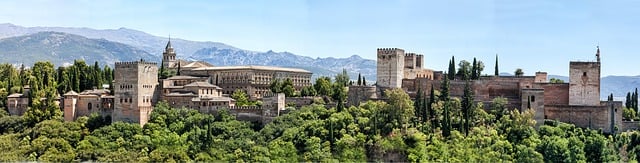
مسلمان سائنسدان اور مفکرین

ابو یوسف یعقوب ابن اسحاق الکندی(800/873)

ابو یوسف یعقوب ابن اسحاق الکندی سنہ 800ع کے قریب کوفہ میں پیدا ہوئے۔ ان کے والد ہارون الرشید کے دربار سے منسلک تھے۔ الکندی المامون ، المعتصم اور المتوکل کا ہم عصر تھا اور بغداد میں بطور فلسفی بڑا نام کمایا۔ انہوں نے المتوکل کے ہاں خطاط کی حیثیت سے ملازمت کی تھی۔ ان کے فلسفیانہ نظریات کی وجہ سے ، متوکل اس سے ناراض ہوئے اور ان کی تمام کتابیں ضبط کرلیں۔ تاہم، بعد میں وہ واپس کردی گئی۔ ان کا انتقال سنہ 873ع میں المعتمد کے دور میں ہوا۔

الکندی کوفہ میں پیدا ہوئے اور وہیں پرورش پائی، کوفہ نویں صدی میں عرب ثقافت اور تعلیم کا اعلیٰ مرکز  تھا جو کے الکندی کے لئے اس وقت بہترین تعلیم کا حصول کے لئے یقینی طور پر صحیح جگہ تھی۔ اگر چہ الکندی کی زندگی کے بارے میں کچھ تفصیلات  مختلف وسائل میں دی گئی ہیں ، لیکن یہ سب مستقل نہیں ہیں۔ ہم ذیل میں تفصیلات دینے کی کوشش کریں گے۔

شروعاتی زندگی

الکندی کے والد کوفہ کے گورنر تھے ، جیسا کہ ان کے دادا بھی رہ چکے تھے۔ یقینی طور پر سب متفق ہیں کہ الکندی کا تعلق جنوبی عرب کے ایک معزز قبیلے کندہ سے تھا۔ اس قبیلے نے متعدد قبائل کو متحد کیا اور پانچویں اور چھٹی صدی میں بہت طاقت حاصل کرلی لیکن پھر چھٹی صدی کے وسط اس قبیلے کا زور جاتا رہا، تاہم اس قبیلے لوگ مسلم دور میں بھی دربار خلافت میں ممتاز عہدوں پر فائز رہے۔

کوفہ میں بنیادی تعلیم حاصل کرنے کے بعد، الکندی اپنی تعلیم مکمل کرنے کے لئے بغداد چلے گئے اور وہاں انہوں نے جلدی ہی بطور فلسفی شہرت حاصل کی جس کی وجہ سے خلیفہ المامون کی توجہ ان کی جانب مبذول ہوئی، جو اس وقت بغداد میں “دارالحکمہ” قائم کر رہے تھے۔

عملی زندگی

المامون علم کے شائق اور سرپرست تھے، انہوں نے “دارالحکمہ” نامی ادارے کی بنیاد رکھی جہاں یونانی فلسفہ اور سائنسی کاموں کا ترجمہ کیا جاتا تھا۔ الکندی کو المامون نے الخوارزمی اور بنو موسی بھائیوں کے ساتھ “دارالحکمہ” میں مقرر کیا۔ الکندی اور اس کے ساتھیوں نے “دارالحکمہ” میں جو اہم کام انجام دیا تھا اس میں یونانی سائنسی مخطوطات کا ترجمہ شامل تھا۔ المامون نے مسودات کی ایک لائبریری تشکیل دی تھی جو کے اسکندریہ میں قائم کردہ لائبریری کے بعد سب سے پہلی بڑی لائبریری تھی۔”دارالحکمہ” کے علاوہ المامون نے رصد گاہیں بھی قائم کیں جن میں مسلمان ماہر فلکیات پہلے کے لوگوں کے حاصل کردہ علم سے استفادہ کر کے مزید تحقیق کرتے تھے۔

حیرت کی بات ہے کہ ایک ایسے شخص کو یونانی مسودات کا ترجمہ کرنے کے لیے مقرر کیا گیا، حالانکہ الکندی یونانی زبان پر اتنا عبور نہیں رکھتا تھا کہ وہ خود ترجمہ کر سکے۔
بلکہ اس نے دوسروں کے ترجموں کو ہی پالش کیا اور بہت سے یونانی تراجم پر تبصرے لکھے۔ واضح طور پر وہ ارسطو کی تحریروں سے سب سے زیادہ متاثر ہوئے تھے لیکن الکندی کے نظریات میں افلاطون اور پروکلس کا اثر بھی دیکھا جاسکتا ہے۔ہمیں یقینی طور پر یہ تاثر نہیں دینا چاہئے کہ الکندی نے اپنے سے پہلے کے مصنفین سے مستعار لیا تھا، کیونکہ انہوں نے ان کے نظریات کو ایک مجموعی اسکیم میں استوار کیا جو یقیناً ان کی اپنی ایجاد تھی۔

علم ریاضی میں خدمات

الکندی نے علم ریاضی پر بھی بہت کام کیا جن میں ہندوستانی نمبروں پر مخطوطات، نمبروں کی ہم آہنگی، لکیروں اور ضرب کے ساتھ نمبر، متعلقہ مقدار، تناسب اور وقت کی پیمائش، اور عددی طریقہ کار اور منسوخی شامل تھے۔ انہوں نے خلا اور وقت پر بھی لکھا، جس کے بارے میں وہ یقین رکھتے تھے کےدونوں ہی لامحدود ہیں، ان کے دعوے کو لامحدود کے تضاد کے ساتھ ثابت کرتے ہیں۔ گیرو الکندی کا ‘ثبوت’ دیتا ہے کہ کسی اصل لامحدود جسم یا وسعت کا وجود اس میں تضاد کا باعث بنتا ہے۔ گیرو اپنے مقالے میں مزید لکھتے ہیں، جدید اصطلاحات میں الکندی کے پیراڈوکس کے غیر رسمی محاکات کو تشکیل دیتا ہے اور ریاضی اور فلسفیانہ نقطہِ نظر سے پیراڈوکس دونوں پر بحث کرتا ہے۔

جیومیٹری

جیومیٹری میں الکندی دیگر کاموں کے درمیان، متوازی نظریات پر لکھا تھا۔ انہوں نے ہموار سطح میں لائنوں کے جوڑے جو بیک وقت غیر متوازی اور غیر مداخلت کرنے والے ہیں کو ظاہر کرنے کے امکان کی تحقیقات کی اور ایک مقالہ لکھا ۔ جیومیٹری سے متعلق بھی دو مقالے تھے جو انہوں نے آپٹکس پر لکھے تھے، اگرچہ انہوں نے وقت کی معمول کی مشق پر عمل کیا اور روشنی کے اصول اور نظریہ وژن کو آپس میں الجھا دیا۔

بھر حال الکندی کے اپنے الفاظ اس بات کا بہترین اشارہ دیتے ہیں کہ اس نے اپنے تمام کام میں کیا کرنے کی کوشش کی۔ اپنی ایک کتاب کے تعارف میں انہوں نے لکھا:

یہ اچھا ہے کہ ہم اس کتاب میں کوشش کرتے ہیں، جیسا کہ تمام مضامین میں ہماری عادت ہے، یہ یاد رکھنا جس کے بارے میں قدیم لوگوں نے ماضی میں جو کچھ سیکھا، وہ سب سے آسان اور سب سے کم ہے اور جو ان کی پیروی کرنے والوں نے اپنایا ہے، اور مزید ان کے کاموں کو  آگے بڑھانے کے لئے جہاں تک ہم سے پہلے کے لوگ نہیں پہنچ سکے۔

کیمیسٹری

کیمسٹری میں ، اس خیال کی مخالفت کی کہ بنیادی دھاتوں کو قیمتی دھاتوں میں تبدیل کیا جاسکتا ہے۔ مروجہ کیمیائی نظریات کے برعکس ، وہ اس بات پر زور دے رہے تھے کہ کیمیائی رد عمل عناصر میں کوئی تبدیلی نہیں لا سکتا ہے۔ طبیعیات میں انہوں نے جیومیٹریکل آپٹکس پے انہوں نے بہت کام کیا اور اس پر ایک کتاب بھی لکھی۔ بعد میں اس کتاب نے راجر بیکن جیسے نامور سائنسدانوں کو رہنمائی اور تحریک دی۔

تصانیف

وہ ایک مصاحب مصنف تھے ، ان کی لکھی ہوئی کتابوں کی کل تعداد 241 تھی ، ان میں نمایاں کتابیں یہ تھیں:

  • فلکیات 16
  • ریاضی 11
  • جیومیٹری 32
  • طب 22
  • طبیعیات 12
  • فلسفہ 22
  • منطق 9
  • نفسیات 5
  • اور موسیقی 7

اس دور میں علوم کی بحالی سائنس اور فلسفہ کی ترقی میں الکندی کا بہت نمایاں کردار تھا۔ قرون وسطی میں ، کارڈانو نے اسے بارہ عظیم ذہنوں میں سے ایک قرار دیا۔ حقیقت میں اس کے کام صدیوں سے مختلف مضامین، خاص طور پر طبیعیات، اور ریاضی کی ترقی کا باعث بنے ہیں۔

Muslim Scientists

Mohammad Bin Musa (Died 840 C.E.)

Abu Abdullah Mohammad Ibn Musa al-Khawarizmi was born at Khawarizm (Kheva), south of Aral sea. Very little is known about his early life, except for the fact that his parents had migrated to a place south of Baghdad. The exact dates of his birth and death are also not known, but it is established that he flourished under Al- Mamun at Baghdad through 813-833 and probably died around 840 C.E.

To celebrate the 1200th birth anniversary of Muhammad bin Musa Al-Khawarizmi the former USSR issued this postal stamp pictured on top.

The terms Algebra and Algorithm are familiar to all of us but how many have heard of their founder Mohammed AlKhawarizmi.

In Geography he revised and corrected Ptolemy’s view and produced the first map of the known world in 830 CE. He worked on measuring the volume and circumference of the earth, and contributed to work related to clocks, sundials and astrolabes.

His Life

Abu Abdallah Muhammad ibn Musa Al-Khawarizmi. The lastmentioned name (his nisba) refers to his birthplace, Khwarizm, modern Khiva, south of the Aral Sea. He was born around 780 in the town of Kath part of Khwarism. Kath is now buried in the sand. He died around 850. He was summoned to Baghdad by Caliph Al-Mamun and appointed court astronomer. From the title of his work, Hisab Al-Jabr wal Mugabalah (Book of Calculations, Restoration and Reduction), Algebra (Al-Jabr) derived its name.

Algebra symbolizes the debt of Western culture to Muslim mathematics. Ironically, when it first entered the English language it was used as a term for setting of broken bones, and even sometimes for the fractures themselves. This reflects the original literal meaning of the Arabic word al-Jabr, ‘the reuniting of broken bones,’ from the verb jabara ‘reunite.’ The anatomical connotations of this were adopted when the word was borrowed, as algebra, into Spanish, Italian and medieval Latin from one or other of which English acquired it. In Arabic, however, it had long been applied to the solving of algebraic equations. The full Arabic expression was ‘Ilm aljabr wa’l muqabalah’ ”the science of reunion and equations,’ and the mathematician Al-Khawarizmi used aljabr as the title of his treatise on algebra.

In the twelfth century Gerard of Cremona and Roberts of Chester translated the algebra of Al-Khawarizmi into Latin. Mathematicians used it all over the world until the sixteenth century.

A Latin translation of a Muslim arithmetic text was discovered in 1857 CE at the University of Cambridge library. Entitled ‘Algoritimi de Numero Indorum’, the work opens with the words: ‘Spoken has Algoritimi. Let us give deserved praise to God, our Leader and Defender’.

It is believed that this is a copy of Al-Khawarizmi’s arithmetic text, which was translated into Latin in the twelfth century by Adelard of Bath (an English scholar). Al-Khawarizmi left his name to the history of mathematics in the form of Algorism (the old name for arithmetic).

His Work

Al-Khawarizmi was a mathematician, astronomer and geographer. He was perhaps one of the greatest mathematicians who ever lived, as, in fact, he was the founder of several branches and basic concepts of mathematics. In the words of Phillip Hitti:

"He influenced mathematical thought to a greater extent than any other mediaeval writer." 

His work on algebra was outstanding, as he not only initiated the subject in a systematic form but he also developed it to the extent of giving analytical solutions of linear and quadratic equations, which established him as the founder of Algebra.

Hisab Al-jabr wAl-muqabala, contains analytical solutions of linear and quadratic equations and its author may be called one of the founders of analysis or algebra as distinct from geometry. He also gives geometrical solutions (with figures) of quadratic equations, for example X2 + 1OX = 39, an equation often repeated by later writers. The ‘Liber ysagogarum Alchorismi in artem astronomicam a magistro A. [Adelard of Bath] compositus!’ deals with arithmetic, geometry, music, and astronomy; it is possibly a summary of Al-Khawarzmi’s teachings rather than an original work.

His astronomical and trigonometric tables, revised by Maslama Al-Majrti (Second half of tenth century), were translated into Latin as early as l126 by Adelard of Bath. They were the first Muslim tables and contained not simply the sine functionbut also the tangent (Maslama’s interpolation).

His arithmetic synthesised Greek and Hindu knowledge and also contained his own contribution of fundamental importance to mathematics and science. Thus, he explained the use of zero, a numeral of fundamental importance developed by the Arabs. Similarly, he developed the decimal system so that the overall system of numerals, ‘algorithm’ or ‘algorizm’ is named after him. In addition to introducing the Indian system of numerals (now generally known as Arabic numerals), he developed at length several arithmetical procedures, including operations on fractions. It was through his work that the system of numerals was first introduced to Arabs and later to Europe, through its translations in European languages.

He developed in detail trigonometric tables containing the sine functions, which were probably extrapolated to tangent functions by Maslamati.

He also perfected the geometric representation of conic sections and developed the calculus of two errors, which practically led him to the concept of differentiation. He is also reported to have collaborated in the degree measurements ordered by AlMamun which were aimed at measuring of volume and circumference of the earth.

His Books

Several of his books were translated into Latin in the early 12th century. In fact, his book on arithmetic, Kitab Al-Jam’a walTafreeq bil Hisab Al-Hindi, was lost in Arabic but survived in a Latin translation. His astronomical tables were also translated into European languages and, later, into Chinese. His geography captioned Kitab Surat-Al-Ard,(The Face of the Earth) together with its maps, was also translated. In addition, he wrote a book on the Jewish calendar Istikhraj Tarikh Al-Yahud, and two books

on the astrolabe. He also wrote Kitab Al-Tarikh and his book on sun-dials was captioned Kitab Al-Rukhmat, but both of them have been lost.

A Servant of God

Al-Khawarizmi emphasised that he wrote his algebra book to serve the practical needs of the people concerning matters of inheritance, legacies, partition, law suits and commerce. He considered his work as worship to God.

Muslim Scientists

Jabir Ibn Haiyan (Died 803 C.E.)

Jabir Ibn Haiyan, the alchemist Geber of the Middle Ages, is generally known as the father of chemistry.  Abu Musa Jabir Ibn Hayyan, sometimes called  al-Harrani and  al-Sufi, was the son of the druggist (Attar). The precise date of his birth is the subject of some discussion, but it is established that he practised medicine and alchemy in Kufa around 776 C.E. He is reported to have studied under Imam Ja’far Sadiq and the Ummayed prince Khalid Ibn Yazid. In his early days, he practised medicine and was under the patronage of the Barmaki Vizir during the Abbssid Caliphate of Haroon al-Rashid. He shared some of the effects of the downfall of the Barmakis and was placed under house arrest in Kufa, where he died in 803 C.E. Jabir’s major contribution was in the field of chemistry. He introduced experimental investigation into alchemy, which rapidly changed its character into modern chemistry. On the ruins of his well-known laboratory remained after centuries, but his fame rests on over 100 monumental treatises, of which 22 relate to chemistry and alchemy. His contribution of fundamental importance to chemistry includes perfection of scientific techniques such as crystalization, distillation, calcination, sublimation and evaporation and development of several instruments for the same. The fact of early development of chemistry as a distinct branch of science by the Arabs, instead of the earlier vague ideas, is well-established and the very name chemistry is derived from the Arabic word al-Kimya, which was studied and developed extensively by the Muslim scientists. Perhaps Jabir’s major practical achievement was the discovery of mineral and others acids, which he prepared for the first time in his alembic (Anbique). Apart from several contributions of basic nature to alchemy, involving largely the preparation of new compounds and development of chemical methods, he also developed a number of applied chemical processes, thus becoming a pioneer in the field of applied science. His achievements in this field include preparation of various metals, development of steel, dyeing of cloth and tanning of leather, varnishing of water-proof cloth, use of manganese dioxide in glass-making, prevention of rusting, letterring in gold, identification of paints, greases, etc. During the course of these practical endeavours, he also developed aqua regia to dissolve gold. The alembic is his great invention, which made easy and systematic the process of distillation. Jabir laid great stress on experimentation and accuracy in his work. Based on their properties, he has described three distinct types of substances. First, spirits i.e. those which vaporise on heating, like camphor, arsenic and ammonium chloride; secondly, metals, for example, gold, silver, lead, copper, iron, and thirdly, the category of compounds which can be converted into powders. He thus paved the way for such later ical reactions, definite quantities of various substances are involved and thus can be said to have paved the way for the law of constant proportions. A large number of books are included in his corpus. Apart from chemistry, he also contributed to other sciences such as medicine and astronomy. His books on chemistry, including his Kitab-al-Kimya, and Kitab al-Sab’een were translated into Latin and various European languages. These translations were popular in Europe for several centuries and have influenced the evolution of modern chemistry. Several technical terms devised by Jabir, such as alkali, are today found in various European languages and have become part of scientific vocabulary. Only a few of his books have been edited and published, while several others preserved in Arabic have yet to be annotated and published. Doubts have been expressed as to whether all the voluminous work included in the corpus is his own contribution or it contains later commentaries/additions by his followers. According to Sarton, the true worth of his work would only be known when all his books have been edited and published. His religious views and philosophical concepts embodied in the corpus have been criticised but, apart from the question of their authenticity, it is to be emphasised that the major contribution of Jabir lies in the field of chemistry and not in religion. His various breakthroughs e.g., preparation of acids for the first time, notably nitric, hydrochloric, citric and tartaric acids, and emphasis on systematic experimentation are outstanding and it is on the basis of such work that he can justly be regarded as the father of modern chemistry. In the words of Max Mayerhaff, the development of chemistry in Europe can be traced directly to Jabir Ibn Haiyan.